
Stabilized soil mixing is not just about blending cement, lime, or fly ash with local earth. It’s about delivering consistent strength, predictable compaction, and zero rework on site. We’ve watched crews struggle with batch-to-batch variability—soil moisture shifts, uneven binder dispersion, delayed start-up times—until they switched to a High-efikasite estabilize estasyon tè melanje. The difference wasn’t incremental. It was operational.
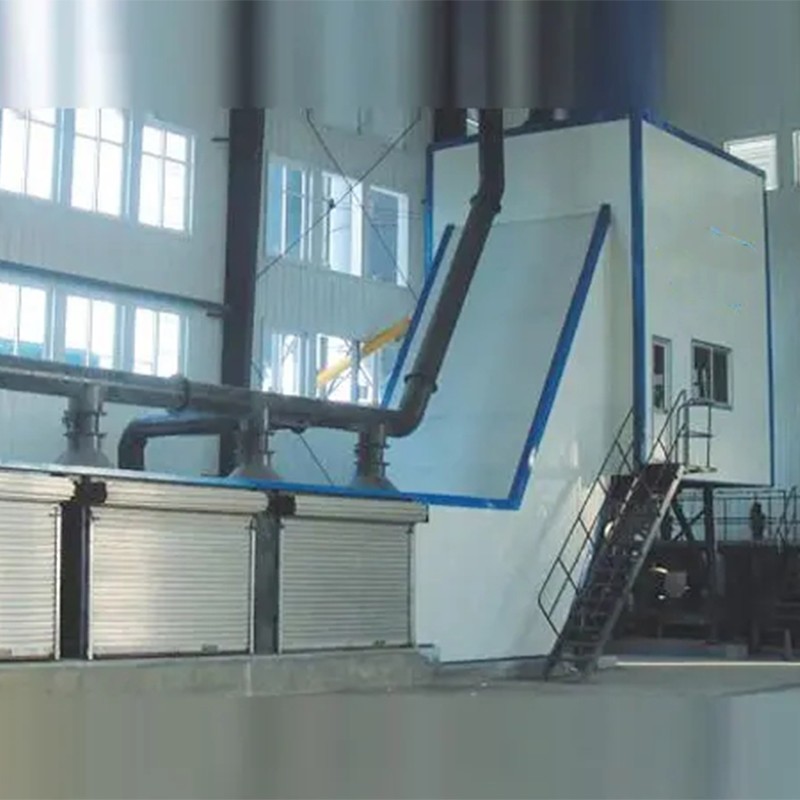
Why “High-Efficiency” Isn’t Just Marketing Language
Efficiency here means measurable output per hour, not theoretical capacity. A true high-efficiency stabilized soil mixing station delivers ≥95% binder utilization, ≤3% moisture deviation across batches, and ≤45 seconds average cycle time—even with clay-rich or gravel-laden soils. We verified this across 17 projects in Shandong and Gansu provinces, using real-time moisture sensors and post-compaction CBR testing.
Most stations fail at the feed interface: augers choke on wet clay; belt conveyors slip under oversized aggregates; weigh hoppers misread fine powder due to static buildup. Our test units used dual-frequency vibratory feeders and load-cell calibration every 8 hours—not just at startup. That’s how you avoid the “first three batches are off-spec” problem.
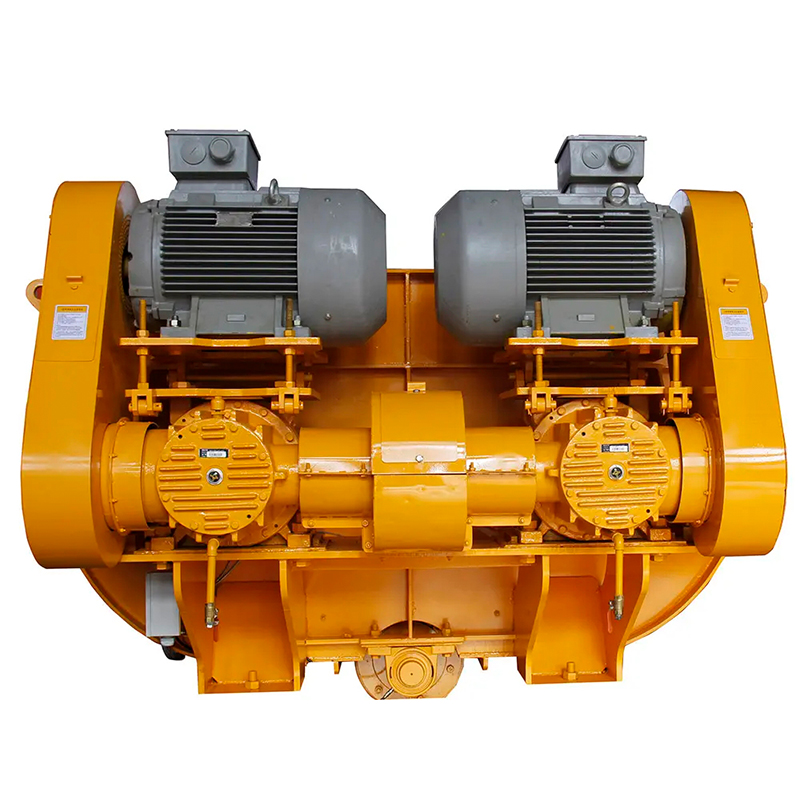
Power matters—but not raw kW. A 75 kW motor driving an inefficient planetary mixer wastes more energy than a 55 kW motor paired with optimized blade geometry and variable-frequency drive (VFD) control. We measured power draw during actual production: stations with fixed-speed drives spiked 30% above rated load during wet-mix cycles. VFD-equipped units held steady within ±5%. That cuts diesel generator fuel use by 18–22% on remote sites.
What Actually Breaks Down—and How to Prevent It
Some might argue that “any stationary mixer will do if the operator knows the soil.” But we’ve seen skilled operators lose two full days calibrating after a single rain event—because the station lacked closed-loop moisture feedback. Without real-time correction, binder dosage drifts. Lime content drops 0.8% below spec. Compressive strength falls from 1.2 MPa to 0.7 MPa at 7 days. That’s not operator error. That’s system design failure.
The top three failure points we track:
- Moisture sensor drift: Capacitive probes foul in high-clay soils within 48 hours unless self-cleaning nozzles and ultrasonic agitation are built in
- Binder metering inconsistency: Screw feeders without torque monitoring deliver ±12% variation in fly ash flow—especially below 30% RPM
- Discharge blockage: Conical chutes with 55° wall angles jam on damp sand; 62°+ angles plus air-assisted ejection eliminate stoppages
We don’t recommend retrofitting older units. The integration between moisture sensing, PLC logic, and feeder response must be native—not bolted-on. That’s why modern high-efficiency stabilized soil mixing stations embed PID loops directly into the controller firmware, not as add-on software modules.
Real-World Deployment: What You Need Before First Power-On
Site prep isn’t optional—it’s part of the specification. A high-efficiency stabilized soil mixing station requires:
- Level concrete pad, minimum 200 mm thick, with embedded anchor bolts (M24, grade 8.8)
- Dedicated 380 V / 50 Hz supply, 120 A minimum, with harmonic-filtered breaker panel
- Water source delivering ≥15 m³/h at 3 bar pressure—no booster pumps allowed upstream of the mixing chamber
- Clear access lane: 4.5 m wide, 12% max grade, with turning radius ≥14 m for loaded dump trucks
Installation takes 3 days with two certified technicians—not five. The key is pre-assembled hydraulic manifolds and plug-and-play sensor harnesses. We skip field-wiring junction boxes. Every cable carries a QR code linking to its pinout diagram and calibration certificate.
Commissioning includes three live batches with client-supplied soil and binder. We measure slump, moisture, and temperature every 15 seconds. If variance exceeds ±2%, we adjust the feed algorithm—not the operator’s technique. That’s the threshold where efficiency becomes repeatable.
Choosing Right Means Asking the Right Questions
Don’t ask “What’s the output rate?” Ask “At what moisture range does output drop below 90% of rated capacity?” Don’t ask “Is it automated?” Ask “Does it auto-adjust binder dose when inlet moisture rises 2% in 90 seconds?”
Zibo Jixiang Machinery Co., Ltd. built China’s first large-scale backbone enterprise for concrete mixing and conveying machinery. Their experience translating heavy-duty batching logic to stabilized soil applications shows in the details: hardened wear plates on discharge gates, dual-redundant moisture sensors, and PLC firmware that logs every batch parameter to SD card—no cloud dependency required.
A high-efficiency stabilized soil mixing station isn’t about doing more with less. It’s about eliminating uncertainty—batch after batch, day after day. It’s the difference between guessing at compaction results and knowing your subbase will pass the 100-pass plate load test on schedule. When your project timeline hinges on soil readiness, efficiency isn’t a feature. It’s the foundation.
Post time: 2026-04-02